nanjing.one
Plan a day

HomeAttractions

The essential twelve.

Twelve places that explain the city: imperial tombs and a republic's mausoleum on Purple Mountain, the Ming wall and its largest gate, the lantern-lit Qinhuai, and a memorial that asks for silence. Each entry has the nearest metro stop, ticket notes and how long to allow.

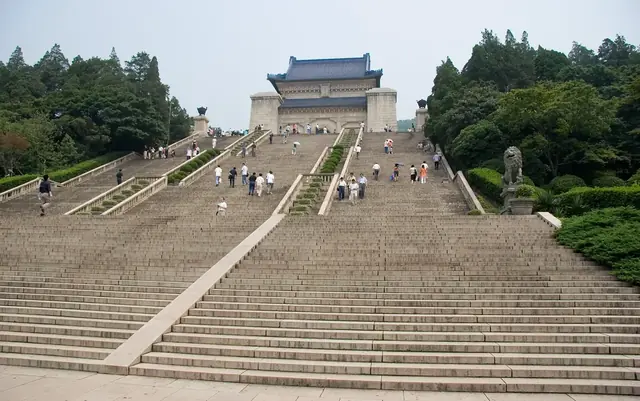
Granite staircase rising up Purple Mountain toward the blue-tiled memorial hall of Sun Yat-sen Mausoleum in Nanjing
Photo: KimonBerlin, CC BY-SA 2.0

Sun Yat-sen Mausoleum

中山陵Zhōngshān Líng

A monumental granite stairway climbing Purple Mountain to the resting place of the founder of the Republic of China.

Designed by architect Lü Yanzhi and built between 1926 and 1929, the Sun Yat-sen Mausoleum (Zhōngshān Líng, 中山陵) sits on the southern slope of Purple Mountain (Zǐjīn Shān, 紫金山). Its ceremonial axis links a memorial archway, stone steps, a stele pavilion, and the blue-roofed sacrificial hall in traditional Chinese forms paired with reinforced concrete. From the upper terrace, visitors look south across the tree canopy of eastern Nanjing.

District
Xuanwu District
Metro
Line 2 to Xiamafang 下马坊 or Muxuyuan 苜蓿园, then scenic shuttle or walk
Tickets
Free admission; advance real-name reservation required (closed Mondays except statutory holidays; check official Zhongshan Scenic Area booking before visiting)
Allow
2 to 3 hours
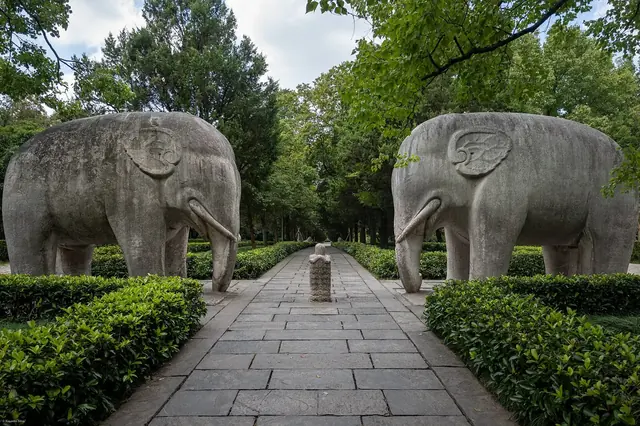
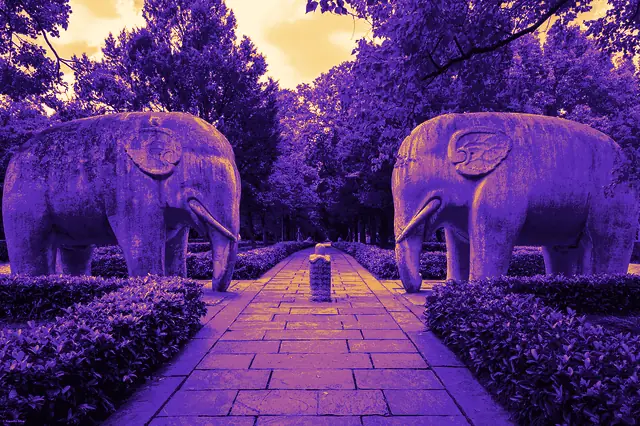
Pair of carved stone elephants facing each other along the tree-shaded Sacred Way at Ming Xiaoling Mausoleum in Nanjing
Photo: xiquinhosilva, CC BY 2.0

Ming Xiaoling Mausoleum

明孝陵Míng Xiàolíng

The UNESCO-listed tomb of the Ming dynasty founder, approached along a winding avenue of stone animals.

Ming Xiaoling Mausoleum (Míng Xiàolíng, 明孝陵) is the resting place of the Hongwu Emperor (Zhu Yuanzhang), built between 1381 and 1405 at the southern foot of Purple Mountain. Inscribed by UNESCO in 2003 as part of the Imperial Tombs of the Ming and Qing Dynasties, it set the architectural template for later Ming and Qing imperial tombs near Beijing. Its winding Sacred Way (Shéndào, 神道) includes Elephant Road (Shíxiàng Lù, 石象路), flanked by 12 pairs of six animal species including lions, camels, elephants, and qilin.

District
Xuanwu District
Metro
Line 2 to Muxuyuan 苜蓿园
Tickets
Paid ticket required (check current Zhongshan Scenic Area rates before visiting)
Allow
2 to 3 hours
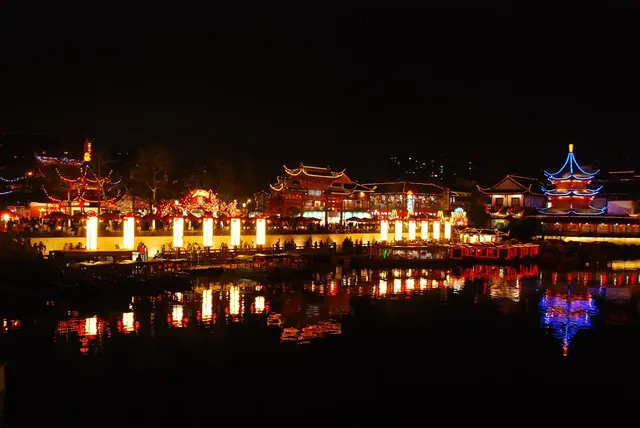
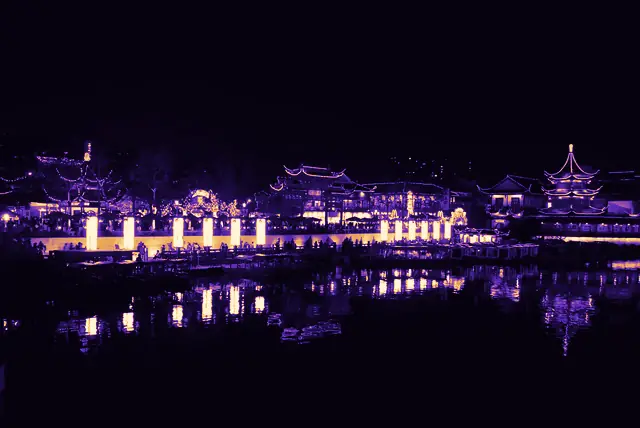
Illuminated pavilions and red lanterns along the Qinhuai River beside Confucius Temple at night in Nanjing
Photo: Dick Rochester, CC BY-SA 2.0

Confucius Temple & Qinhuai River

夫子庙与秦淮河Fūzǐmiào & Qínhuái Hé

Imperial examination halls and lantern-lit canals along Nanjing's historic cultural waterway.

Confucius Temple (Fūzǐmiào, 夫子庙) stands on the northern bank of the Inner Qinhuai River (Qínhuái Hé, 秦淮河), adjacent to the former Jiangnan Examination Hall (Jiāngnán Gòngyuàn, 江南贡院). An imperial academy was first established on this riverbank in the 4th century CE during the Eastern Jin dynasty, and the quarter flourished as southeastern China's scholarly center through the Ming and Qing periods. Restored after 1985, the river belt blends Ming-Qing style halls, stone arch bridges such as Wende Bridge, and evening pleasure boats.

District
Qinhuai District
Metro
Line 3 to Fuzimiao 夫子庙 or Line 1 to Sanshanjie 三山街
Tickets
Pedestrian riverside area free; temple halls, museum, and boat cruises ticketed separately (check before visiting)
Allow
2 to 3 hours (best late afternoon into night)
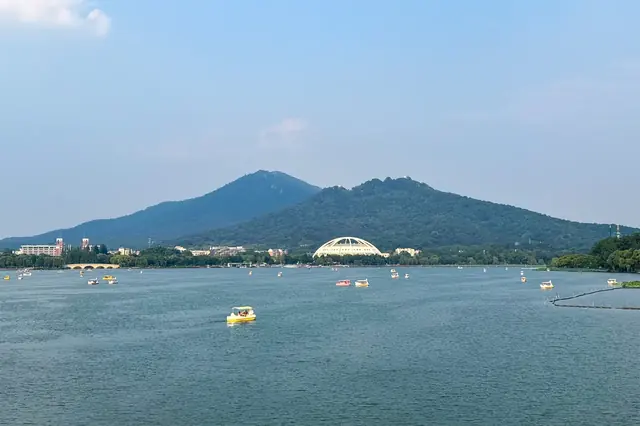
Calm waters of Xuanwu Lake with small boats and Purple Mountain rising behind in Nanjing
Photo: Windmemories, CC BY-SA 4.0

Xuanwu Lake

玄武湖Xuánwǔ Hú

Five bridge-linked islands bordered by the Ming City Wall and Purple Mountain in the heart of the city.

Xuanwu Lake (Xuánwǔ Hú, 玄武湖) sits directly outside the northern Ming City Wall, linking five islands (Huanzhou, Yingzhou, Liangzhou, Cuizhou, and Lingzhou) by arched bridges. Used as an imperial garden during the Six Dynasties (222 to 589), for naval drills in the Song dynasty, and to house the Ming dynasty's Yellow Register Archives (Huángcè Kù, 黄册库), the park is now Nanjing's largest urban lake greenway. Walking the lakeside path frames Purple Mountain to the east and the Zifeng Tower skyline to the southwest.

District
Xuanwu District
Metro
Line 1 to Xuanwumen 玄武门 or Line 3 / Line 4 to Jimingsi 鸡鸣寺
Tickets
Free park entry; boat rentals and sightseeing carts priced separately
Allow
2 to 3 hours
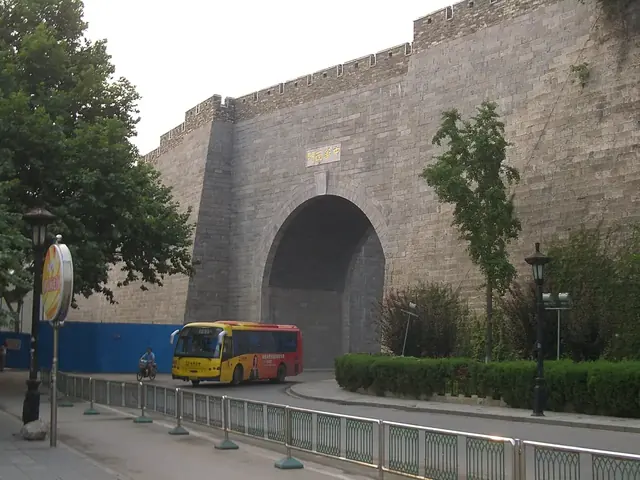
Massive grey stone archway and defensive walls of Zhonghua Gate on the Nanjing City Wall
Photo: Vmenkov, CC BY-SA 3.0

Nanjing City Wall & Zhonghua Gate

南京城墙·中华门Nánjīng Chéngqiáng · Zhōnghuámén

The largest surviving Ming masonry castle-gate complex, built with three barbicans and 27 hidden troop vaults.

Begun in 1366 under the Hongwu Emperor, the Nanjing City Wall (Nánjīng Chéngqiáng, 南京城墙) once ran 35.267 kilometres around the Ming capital, and about 25 kilometres of it still stands. Its southern gateway, originally Jubao Gate (Jùbǎo Mén, 聚宝门) and renamed Zhonghua Gate (Zhōnghuámén, 中华门) in 1931, layers three enclosed courtyards, four arched gates, twin cavalry ramps, and 27 brick-vaulted garrison chambers. Today, visitors can walk long stretches of intact battlements east toward Wuding Gate.

District
Qinhuai District
Metro
Line 1 to Zhonghuamen 中华门
Tickets
Paid ticket for gate complex and wall walkway (check current hours and fees before visiting)
Allow
1.5 to 2 hours
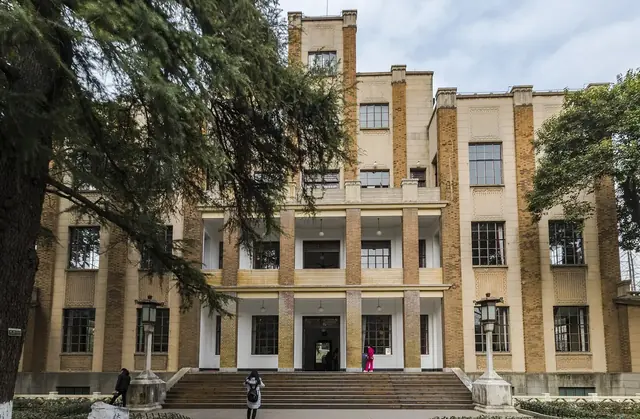
Neoclassical facade of the former Presidential Building framed by tall trees at the Presidential Palace in Nanjing
Photo: ScareCriterion12, CC BY-SA 4.0

Presidential Palace

总统府Zǒngtǒngfǔ

Six centuries of Chinese political history inside one compound, from Ming manor and Taiping palace to the 1927 to 1949 Republican seat.

Located at No. 292 Changjiang Road, the Presidential Palace (Zǒngtǒngfǔ, 总统府) served successively as a Ming prince's manor, the Qing Viceroy's office, Hong Xiuquan's Taiping Heavenly Kingdom palace (1853 to 1864), and the seat of the Republic of China's government from 1927 to 1949. Now operated as the China Modern History Museum (Zhōngguó Jìndàishǐ Bówùguǎn, 中国近代史博物馆), the compound preserves traditional Jiangnan gardens alongside early 20th-century neoclassical offices. Exhibits trace the 1911 Revolution and the Republican period in detail.

District
Xuanwu District
Metro
Line 2 or Line 3 to Daxinggong 大行宫
Tickets
Paid ticket with advance real-name reservation required (closed Mondays except statutory holidays; check before visiting)
Allow
2 hours
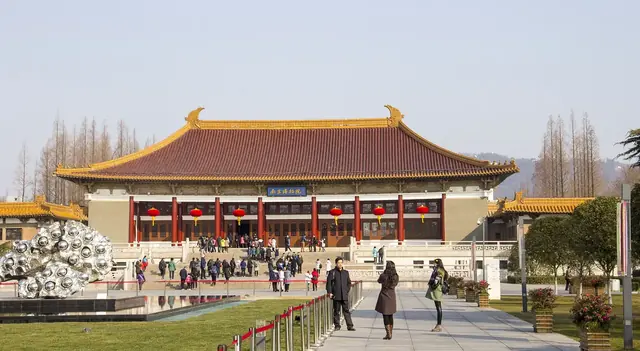
Sweeping traditional yellow-roofed main hall of the Nanjing Museum behind an entrance courtyard
Photo: 維基小霸王, CC BY-SA 4.0

Nanjing Museum

南京博物院Nánjīng Bówùyuàn

One of China's largest museums, holding over 400,000 objects including imperial Ming and Qing porcelain.

Founded in 1933 as the preparatory National Central Museum under educator Cai Yuanpei, the Nanjing Museum (Nánjīng Bówùyuàn, 南京博物院) spans 70,000 square metres near Zhongshan Gate. Its permanent collection of more than 400,000 objects spans prehistoric jade, bronze work, Six Dynasties celadon, and one of the world's largest holdings of Ming and Qing imperial porcelain. Six specialized buildings, including the History Gallery, Digital Gallery, and Republic of China street hall, make it essential on hot or rainy days.

District
Xuanwu District
Metro
Line 2 to Minggugong 明故宫
Tickets
Free admission; mandatory advance real-name reservation (closed Mondays; check official mini-program before visiting)
Allow
2.5 to 4 hours
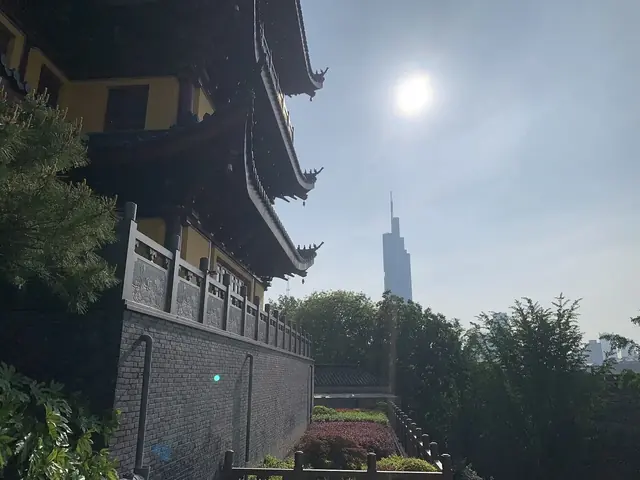
Dark-tiled eaves of Jiming Temple hillside pavilions silhouetted against the modern Zifeng Tower skyline
Photo: Chainwit., CC BY 4.0

Jiming Temple

鸡鸣寺Jīmíng Sì

An ancient Liang-dynasty hillside monastery whose yellow walls and pagoda overlook Xuanwu Lake and the Ming battlements.

First established in 527 CE during the Liang dynasty and rebuilt under the Ming Hongwu Emperor in 1387, Jiming Temple (Jīmíng Sì, 鸡鸣寺) is one of Nanjing's oldest active Buddhist temples. Stepped terraces climb Jilong Hill to the seven-story Medicine Buddha Pagoda (Yàoshī Fótǎ, 药师佛塔), Huomeng Building, and the historic Rouge Well (Yānzhī Jǐng, 胭脂井). Outside the temple gate, Jimingsi Road turns into Nanjing's signature cherry-blossom avenue each spring.

District
Xuanwu District
Metro
Line 3 or Line 4 to Jimingsi 鸡鸣寺
Tickets
Modest entrance fee for the temple (check at the gate); Jimingsi Road outside is free
Allow
1 to 1.5 hours
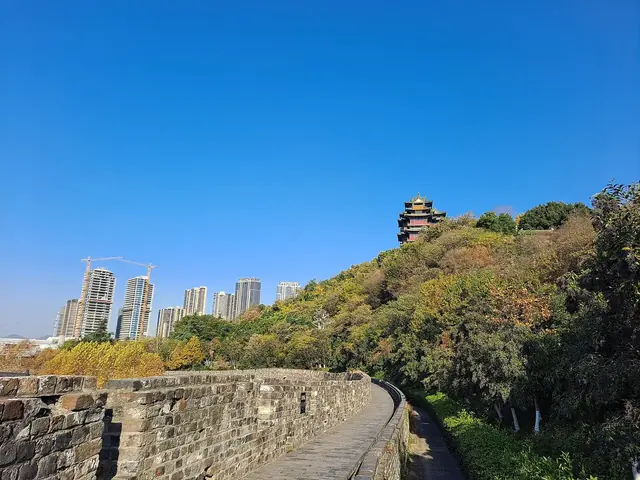
Ming-style Yuejiang Tower rising atop wooded Lion Mountain above a stretch of the Nanjing City Wall
Photo: 钉钉, CC BY-SA 4.0

Yuejiang Tower

阅江楼Yuèjiāng Lóu

Conceived by the Ming founder in 1374 and completed six centuries later atop Lion Mountain overlooking the Yangtze.

In 1374, the Hongwu Emperor ordered Yuejiang Tower (Yuèjiāng Lóu, 阅江楼) built on Lion Mountain (Shīzishān, 狮子山) to commemorate his 1360 victory over Chen Youliang, though construction was never carried out in his lifetime. Designed by Southeast University's Professor Du Shunbao and completed in 2001, the 52-metre, seven-layer Ming-style pavilion commands wide views north across the Yangtze River Bridge and south over the old walled city. It is grouped with Yellow Crane Tower, Tengwang Pavilion, and Yueyang Tower as one of the Four Famous Towers of Jiangnan.

District
Gulou District
Metro
Line 5 to Xiaguan 下关, then a short walk or taxi
Tickets
Paid ticket required (check current hours and prices before visiting)
Allow
1.5 to 2 hours
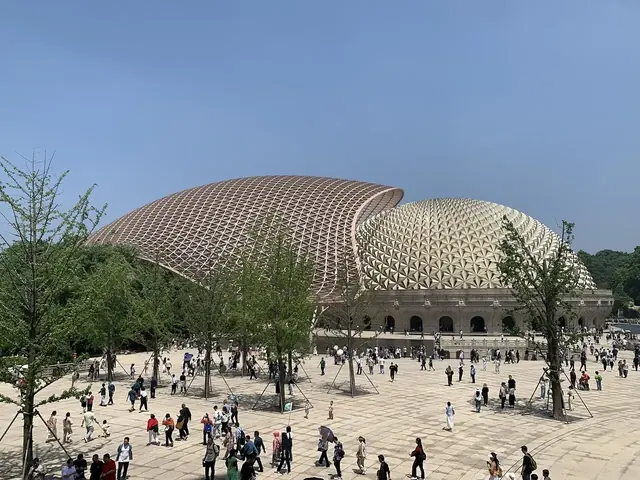
Sculptural lattice domes of the Usnisa Palace rising over the wide plaza at Niushou Mountain in Nanjing
Photo: Chainwit., CC BY 4.0

Niushou Mountain Cultural Park

牛首山Niúshǒushān

Twin mountain peaks housing a six-story subterranean Buddhist sanctuary built inside a reclaimed mining pit.

Named for its twin 242.9-metre peaks resembling ox horns, Niushou Mountain (Niúshǒushān, 牛首山) has been a Buddhist pilgrimage site since the Tang dynasty. Opened in October 2015, the monumental Usnisa Palace (Fódǐng Gōng, 佛顶宫), with three levels above ground and six below, enshrines the parietal skull relic of Shakyamuni Buddha excavated from Nanjing's Dabao'en Temple site. Between the monumental lotus dome and spring-to-autumn mountain trails, it is Nanjing's boldest piece of contemporary sacred architecture.

District
Jiangning District
Metro
Line S1 to Hohai University · Focheng West Road 河海大学·佛城西路 or Line 1 to Tianlongsi 天龙寺, then a short bus or taxi ride
Tickets
Paid ticket; in-park shuttle bus optional and recommended (check prices and relic display dates before visiting)
Allow
3 to 4 hours
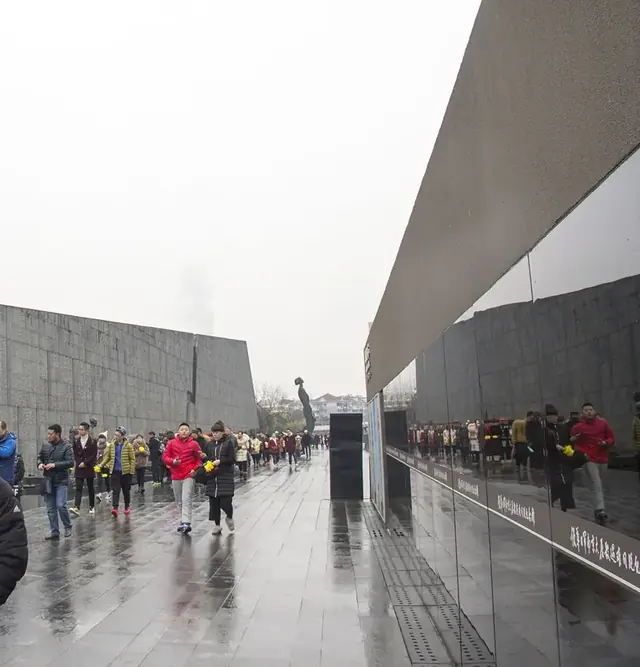
Stark grey concrete memorial walls and reflective courtyard at the Nanjing Massacre Memorial Hall in Jiangdongmen
Photo: 維基小霸王, CC BY-SA 4.0

Nanjing Massacre Memorial Hall

侵华日军南京大屠杀遇难同胞纪念馆Qīn Huá Rìjūn Nánjīng Dàtúshā Yùnàn Tóngbāo Jìniànguǎn

A stark architectural memorial built beside a 1937 mass burial site in Jiangdongmen to document the Nanjing Massacre.

Located in southwestern Nanjing at Jiangdongmen (Jiāngdōngmén, 江东门), the Memorial Hall stands beside a mass grave known as the "pit of ten thousand people" (wànrénkēng, 万人坑). The museum preserves archaeological remains, survivor testimonies, and historical records documenting the atrocities committed after Nanjing fell on 13 December 1937. Its bare stone courtyards, water basins, and sculptural reliefs create one of the city's most solemn spaces for historical reflection.

District
Jianye District
Metro
Line 2 to Yunjinlu 云锦路
Tickets
Free admission; mandatory advance real-name reservation (closed Mondays; check official channel before visiting)
Allow
2 hours
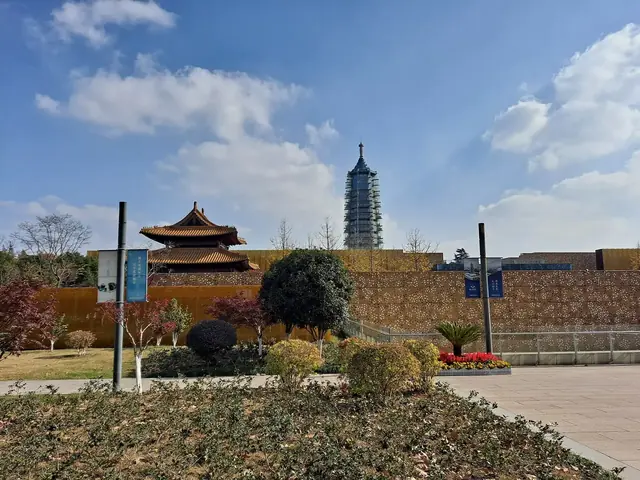
Modern glass-and-steel pagoda rising behind traditional temple walls at Great Bao'en Temple Heritage Park in Nanjing
Photo: 钉钉, CC BY-SA 4.0

Porcelain Tower & Great Bao'en Temple Park

大报恩寺遗址公园Dàbào'ēn Sì Yízhǐ Gōngyuán

The archaeological site of the 15th-century Ming Porcelain Tower, reimagined with a modern glass pagoda above its underground crypt.

Standing just south of Zhonghua Gate on the Outer Qinhuai River, the original Porcelain Tower of Great Bao'en Temple (Dàbào'ēn Sì, 大报恩寺) was completed in 1431 under Ming emperors Yongle and Xuande, with the admiral Zheng He overseeing the last years of construction. Made famous in Europe by 17th-century Dutch traveler Johan Nieuhof before its destruction in the 1850s Taiping Rebellion, the site reopened in December 2015 after major archaeological excavations uncovered the Song-era underground crypt and Ashoka Pagoda reliquary. A light-filled glass-and-steel tower now marks the original pagoda's footprint.

District
Qinhuai District
Metro
Line 1 to Zhonghuamen 中华门 or Line 3 to Yuhuamen 雨花门
Tickets
Paid ticket required (check current hours and fees before visiting)
Allow
1.5 to 2 hours

Check before you go. Several of these sites close on Mondays, and the free ones often need a real-name reservation made in advance. Ticket prices are left out on purpose because they change; the official booking channels have the current ones.